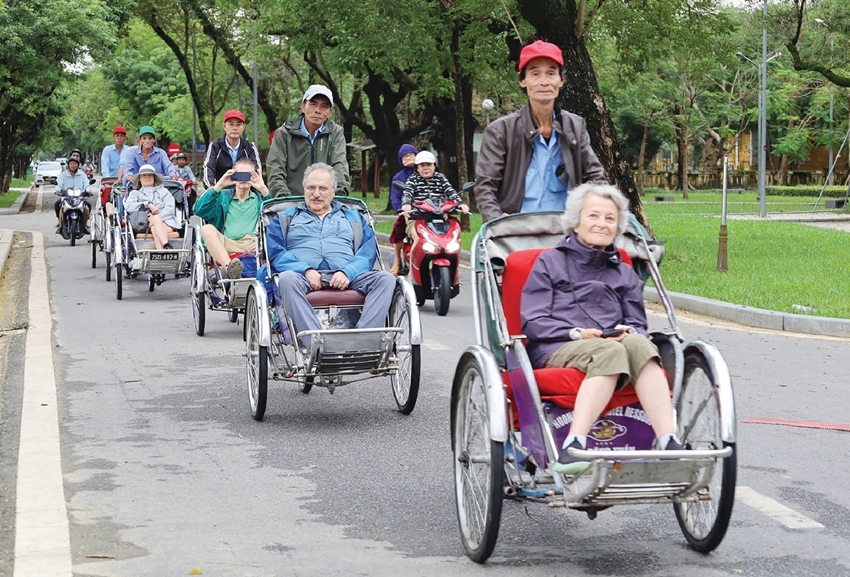
Hue’s visitor markets are still largely traditional ones with a focus on heritage tourism, while the city actually possesses many complementary types of tourism that could further stimulate growth.
In 2025, with strong support from the central government, ministries, and especially the Ministry of Culture, Sports and Tourism, Hue was honored to host the National Tourism Year. However, aside from the opening ceremony and a few activities, many other programs failed to leave a significant mark.
Another issue is that while Hue aims for major breakthroughs in tourism in the coming years, multiple challenges are emerging along the growth pathway. These include tourism products, transportation infrastructure, tourism facilities, human resources, and other concerns. These are pressing issues that must be addressed for Hue to develop rapidly and sustainably.

Mr. Dinh Manh Thang, Vice Chairman of Vietnam Tourism Association, Chairman of Hue Tourism Association
Could you elaborate on the pressures that Hue tourism is currently facing?
In recent times, local authorities, sectors, especially the tourism industry, the Tourism Association, and businesses have all made efforts to overcome difficulties so that Hue tourism can progress quickly and go further. However, each stage of development brings different requirements, and there is a need for objective and candid assessment. For many years, Hue tourism has not introduced many new products and still relies heavily on heritage tourism. Although destinations and businesses have attempted to renew existing products, it is still insufficient. As some people metaphorically say, it is merely an “old bottle with a bit of new wine,” while Hue now needs a “new bottle with new wine,” meaning distinctive, attractive products and destinations must be developed alongside enhancing current ones.
The second issue is transportation and tourism-service infrastructure. As visitor numbers rise, pressure increases on transport systems, roads, parking areas, accommodation facilities, restaurants, and service sites. Difficulties have already emerged as Hue’s streets are narrow and lack parking spaces, and hotels face “sold-out” pressure during peak periods. When visitor numbers surge, the key questions arise: Where will tourists, especially high-end travelers, stay? What services will they spend money on during long stays?
Human resources are also a major concern, particularly high-level management personnel. Although Hue has tourism training institutions and the Tourism Association conducts various training programs, they only meet part of the demand for mid-level and basic labor. Meanwhile, finding qualified senior managers remains difficult.
Another issue is that Hue has not yet strongly or effectively developed its nighttime economy and still lacks large-scale, high-quality entertainment centers - an increasingly essential trend.
Are these challenges affecting both visitor numbers and the ability to attract investors, sir?
These factors can indeed be considered part of the reason. Objectively speaking, local authorities have adopted more open policies to attract investment; however, many still wonder why major investors and leading international brands have not yet come to Hue.
It cannot be denied that Hue faces difficulties such as weather conditions and other objective factors. However, investors always consider favorable conditions and ability to recover capital from investment. Hue must have good infrastructure, convenient transportation, attractive products, appealing destinations, and strong visitor appeal for investors to come. These are the issues that local authorities and relevant sectors must address.
To overcome these challenges and enable Hue’s tourism to break through, what solutions do you think are needed?
The most important factor is to establish a strategic vision for tourism-service development that is comprehensive and effective, addressing all aspects, from facilities, infrastructure, and services to human resources and tourism products.
For example, the nighttime economy is essential for attracting and retaining visitors. Hue already has walking streets and night streets; but the question is how to fully develop an effective nighttime economy. The city must capitalize on the brands “Capital of Cuisine,” “Capital of Ao Dai,” and various performance shows to create nighttime services, as well as leverage the Hue Festival brand name more effectively.
Urban planning must prioritize tourism development, not only in terms of services but also transportation, including parking areas and the application of technology in parking systems. At the same time, workforce training and improving human resource quality must be emphasized.
A particularly important issue is the product factor. New products must be researched and developed according to market demand. Today’s travelers are highly interested in experiential tourism, green tourism, high-end resort tourism, golf tourism, and entertainment activities. Therefore, product development should align with specific customer segments and promising markets.
In addition, a comprehensive reassessment is needed to formulate more attractive policies capable of drawing investors and international brands to Hue.
One strategic direction, considered a major boost for Hue tourism, is to establish mechanisms and planning for a high-end “tourism special zone” connected with the sea and lagoon areas. Hue possesses strong natural advantages for this, and such a development would be a powerful catalyst for rapid and sustainable tourism growth.
Local authorities and the tourism sector must also leverage support from central agencies and ministries to further stimulate tourism development. When these solutions are implemented effectively, along with strong promotion and communication efforts, they will create genuine breakthroughs.
Thank you for the interview!