Beyond specialized measures such as record reviews and DNA testing, digital transformation is progressively asserting its critical role in building databases, preserving, and interconnecting information on martyrs' cemeteries—thereby enhancing management efficiency and serving long-term verification processes. Partnering with the Campaign, the Hue City Center for Information Technology (HueCIT) is deploying the digitization of martyrs' cemetery data using GIS technology, contributing to constructing a digital database, preserving and linking information, improving management efficiency, as well as serving the lookup, cross-referencing, and identity verification of martyrs' remains.
Over the past years, HueCIT has researched, developed, and step-by-step perfected the Cemetery Management Software integrated with GIS technology to modernize cemetery administration through a digital data platform. Beyond modernizing cemetery management, the solution supports data preservation, standardization, and scientific exploitation, laying the foundation for connecting information to serve gratitude activities in the digital transformation era.
On the GIS technology platform, each grave is managed as an electronic record complete with detailed information, images, and exact coordinates on a digital map. The system allows multi-criteria searches, flexible statistics, visual management of current cemetery status, and easy updates whenever new information emerges from archived records or DNA test results. Replacing traditional paper storage with a centralized digital database not only enhances management efficiency but also establishes a foundation for data to be standardized, synchronized, and utilized long-term.
To contribute to raising the implementation effectiveness of the "500 Days and Nights Campaign" for the search, gathering, and identification of martyrs' remains, the system has been expanded with data fields to store martyrs' DNA data and relatives' matching DNA samples, creating a data foundation to serve lookups, cross-referencing, and supporting identity verification. Through the software, commune and ward-level officials can proactively update timely information on martyrs within their management areas, helping perfect the database according to reality.
To date, HueCIT has completed the deployment of the GIS-based Cemetery Management Software at 4 out of 6 targeted martyrs' cemeteries, including Binh Chanh - Binh Tan Martyrs' Cemetery, Nha Be Martyrs' Cemetery (Ho Chi Minh City), Huong Dien Martyrs' Cemetery, and Huong Thuy Town Martyrs' Cemetery (now under Hue City), thereby building a database for over 7,000 martyrs' graves. The system helps management units easily look up grave locations, update records, and manage centralized data, while supporting relatives and functional agencies during the information lookup and cross-referencing processes.
Additionally, the solution has been implemented at 2 out of 3 urban cemeteries, meeting management and service provision requirements (contract management, grave care, service payments, information lookup, etc.), thereby expanding the application scope of the cemetery management solution developed by HueCIT.
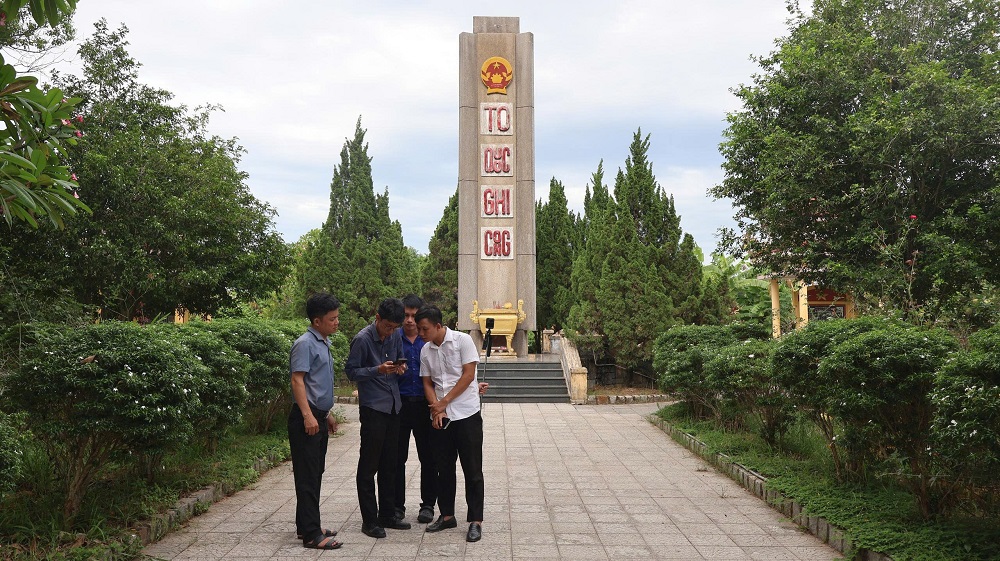
HueCIT's technical team conducting field surveys and standardizing data to serve the deployment of the GIS-based Cemetery Management Software.
In 2026, HueCIT continues to expand digitization deployment at 2 Martyrs' Cemeteries in Thuy Xuan Ward (including Thuy Bieu Martyrs' Cemetery and Thuy Bang Martyrs' Cemetery) in Hue City, and Yen Vien Martyrs' Cemetery in Hanoi, continuing to complete the digital database serving management, lookups, and tributes to Heroic Martyrs.
Currently, HueCIT is urgently carrying out field surveys and coordinating with local authorities to digitize the aforementioned cemeteries as a practical activity responding to the "500 Days and Nights Campaign" and moving towards the 79th anniversary of War Invalids and Martyrs' Day (July 27, 1947 – July 27, 2026). This also represents one of HueCIT’s dedicated efforts to apply technology to solve practical social problems, driving effective digital transformation for the community.
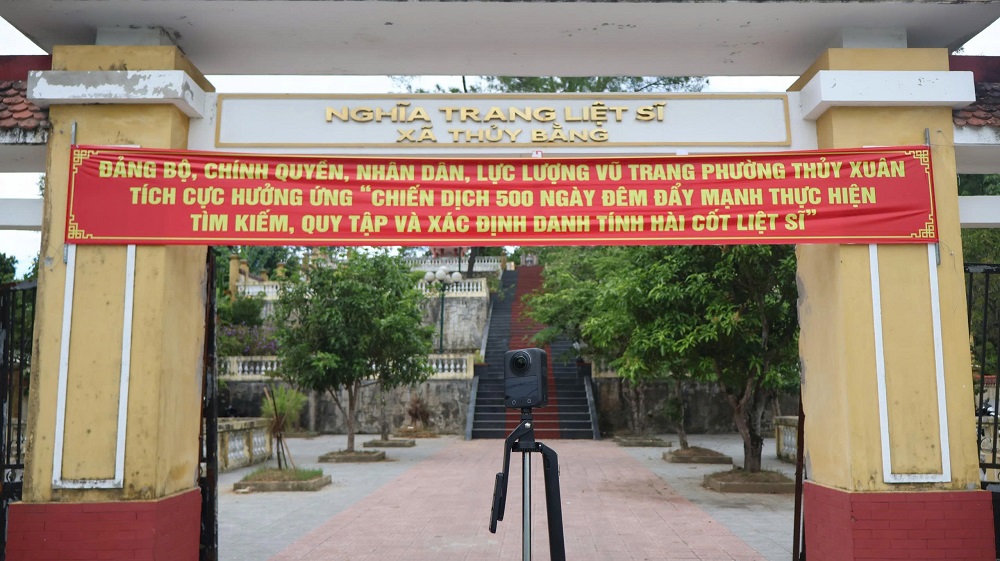
360-degree camera equipment used by HueCIT to collect data for building digital cemetery databases on the GIS platform.